Pages - Menu

Showing posts with label Scuba Diving Vacation. Show all posts

Saturday, December 10, 2011

46,000 divers visit Sabah annually

KOTA KINABALU: Sabah Tourism Board chairman Datuk Seri Tengku Zainal Adlin said there are about 46,000 divers from across the globe visiting Sabah annually as the state has an astounding array of islands off its coastlines on both its eastern and western boards.

“An income of about RM200 million has been derived by the State from diving activities every year and this serves as a positive indicator respecting tourist arrivals in Sabah,” he said.

According to Tengku Zainal Adlin, the Miss Scuba international pageant which is held in the State will contribute to more divers visiting the islands in Sabah.

“We hope this pageant will send a clear message to the world and create an awareness that Sabah has the most amazing diving destinations,” he said at a press conference after launching the mini dive exhibition in conjunction with the pageant at 1Borneo Hypermall yesterday.

Tengku Zainal Adlin said there are many certified agencies in the State like Padi and Naui which provide diving lessons and promote safe diving practices.

According to Robert Lo, the chairman and founder of Miss Scuba International, the pageant’s contestants underwent a scuba diving course at Mabul Island from Nov 24 to Dec 6.

The 15 contestants representing China, Hong Kong, Malaysia, Indonesia and Thailand also attended a catwalk choreography course and marine conservation workshops organised by the Marine Research Foundation and WWF.

“They also participated in two underwater and beach clean-ups, one at Mabul and the other at the Tunku Abdul Rahman National Marine Park here,” Lo said at a press conference.

The contestant who is crowned Miss Scuba International 2011, will proceed to become the marine ambassador to promote diving worldwide at diving events, exhibitions and shows.

Continue reading at: 46,000 divers visit Sabah annually
.
.

Wednesday, November 2, 2011

Sipadan dive operators’ painful sacrifice pays off

SEMPORNA: “Moving out from Sipadan Island was a painful sacrifice. We not only lost millions of Ringgit but lost many of our customers as well,” said Borneo Divers managing director Clement Lee.

This was his spontaneous response when asked on his feeling after Clement and other dive resort operators were asked to vacate Sipadan Island in 2004, after occupying the island for about 10 years.

The directive from the state government came about after the marine environment and underwater habitat of the 12-hectare Sipadan Island National Park was adversely affected by human activities.

Construction of physical infrastructure such as resorts and other facilities to meet the increasing demand from divers all over the world at the end endangered the fragile marine ecosystem around the park.

The most apparent decline was the number of marine species, which were abundant around the island when the place was first explored by Borneo Divers in 1993.

However, Clement who pioneered the diving industry in Sipadan Island in 1994 and other dive operators have no regret over their decision to cooperate with the authorities for the sake of preserving Sipadan Island for the future generation.

“So we left, thinking that we were doing the right thing and investing in our future,” said Clement adding had they continued their stay on Sipadan the destruction there could have been worse. After vacating the island, they continued with diving activities there but kept strict to the regulations introduced by the government including limiting the number of divers to the park to 120 compared with the unlimited numbers previously.

After moving out, Clement opened a dive resort on 2.6 hectares of land in Mabul Island, located about 15 minutes away from Sipadan by speed boat.

Clement and other dive operators’ sacrifice had significantly changed Sipadan as researches found that the marine life there has regenerated fast and the underwater environment had improved tremendously.

“Absolutely after seven years, now the marine life there has improved. What I had personally seen before, I see it now. I can compare the past and present. I have seen the good sign for sure,” said Clement based on his and his diving friends’ observation on Sipadan now.

Continue reading at: Sipadan dive operators’ painful sacrifice pays off
.
.

Wednesday, October 26, 2011

Divers find wreck of Dutch WWII sub off Borneo

THE HAGUE: Sport divers off the northern coast of Borneo have discovered the wreck of a Dutch World War II submarine, missing for the past 70 years, the Dutch defence ministry said Monday.

“The HR. MS. KXVI, which has been missing with a crew of 36 since 1941, has been found,” it said in a statement released in The Hague.

“It was discovered by Australian and Singaporean sport divers in the waters ‘above’ the island of Borneo after a tip-off from a local fisherman,” the ministry added.

It did not state the exact location of the wreck out of respect for the dead crew and their descendants.

The 1,000-tonne KXVI was part of the Allied fleet tasked with stopping the Japanese invasion of the then Dutch East Indies.

Continue reading at: Divers find wreck of Dutch WWII sub off Borneo
.
.

Friday, October 7, 2011

Sabah, a Water Wonderland

Shame on me. My mobile phone has already buzzed with a text from Dean Alston (my phone often buzzes in the night, when I am away, with dire and humorous warnings from our cartoonist of the fates that may befall me in foreign climes).

I wasn't asleep this time. I was lying in a room big enough to host a table-tennis tournament, on stilts over the ocean off the north-east coast of Sabah. With all the windows open, rejoicing in the lack of insects out here, I was listening to the fans whir in the warm night, and the water lap around the piles, the cries of the heron, and a more distant one of a baby in another room, and outbreak of singsong Asian voices and the odd explosion of fish-frenzy in the water. One of the staff passed quietly along the jetty on a bicycle - like running a finger along a note-less piano keyboard.

It is a languid, still night, with barely a breath of movement in the air, and I have dined on rice and salad and supped a Tiger beer at the Sipadan Kapalai Dive Resort's big restaurant. Out here, 100m along a wooden boardwalk, sort-of at sea, surrounded by reef and dive sites. Happy and relaxed.

But, shame on me, I reply to Alston (trust me, one should never reply to Alston's texts - it's asking for trouble), and with my brain now ticking over, I start to list all the things I need to do in the morning. And my brain starts composing emails. Shame on me. I give up, get up, get the laptop out and sit outside on the back deck, in the night, tapping those emails up and into the drafts box, wearing the head torch so I can see the keys to type.

Well, I start to.

But the night takes over. The deck is about 4m above the gently lapping water, and big - 7mx4m. It is slatted and there are lights underneath, so I can see the water between each slat, and the floor of the ocean under the shallow water.

A pipefish the size of my leg cruises past, with three more, slightly smaller, in tow behind. I look over the rail and the floor is dotted with starfish.

A parrot fish. A small stingray. Myriad clouds of tiny but colourful reef fish.

It is the sort of night you want to relish. You don't want to go to sleep.

All around me, the other over-water suites are quiet, and I just lie out here on the deck, watching the fish, feeling the night, letting the stillness soak into me.

Sipadan Kapalai Dive Resort is a 45-minute boat trip from Semporna, which is 70-odd kilometres, or an hour and a half in a minibus, from Tawau, on the east coast of the Malaysian State of Sabah, on the northern end of Borneo. Tawau is an 80-minute flight from Kota Kinabalu, which is five hours and 45 minutes direct with Malaysia Airlines from Perth.

So, now we know where we are.

But where are we?

Well, we are in one of the world's most respected dive areas, and that is what most people on Sipadan Kapalai Dive Resort are here for. The area is widely considered one of the world's top five dive destinations, with myriad fish, turtles, shallow corals and a 700m drop into the Celebes Sea.

Sipadan Kapalai Dive Resort lists 28 close-by dive sites, from blue spotted garden to sweet-tips table, twin peak to coral garden. All can be reached in a few minutes by boat. Diving around Kapalai is shallow and easy.

There's macro, small-fish and reef life around Kapalai, big fish and turtles at nearby Sipadan and muddy bottoms at Mabul.

Continue reading (Incl. Pic) at: Sabah, a Water Wonderland
.
.

Tuesday, August 16, 2011

Speechless in Sipadan


The only oceanic island in Malaysia, it is a divers' paradise teeming with marine wildlife


Finding a hotel with a dive centre is an important preoccupation mostly reserved for scuba divers. Some travellers will prioritise a spa, swimming pool or kids' club. But if you want to dive, all day, every day of your holiday — like I do — then finding a dive resort that revolves around surface intervals and hot coffee is a godsend.


Borneo Divers Mabul Resort, on Mabul Island, off the coast of Borneo, is one such pearl. Blessed with healthy corals on its doorstep, the locale begs for guests to strap on a weight belt and explore the house reef, appropriately named Paradise 1, with either snorkel or scuba, just a few metres from the shore.


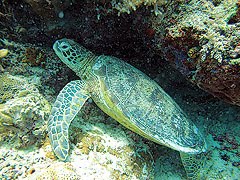
Paradise 2 is not far off. Dinner table-sized green turtles, cuttlefish and minute mandarin fish are all residents.


The resort, and the island, fully qualify for tropical-island-getaway bliss. Accompanying non-divers will be able to laze around the pool, acquire a hammock or chill out at the beach bar overlooking the wooden pier and jetty to watch their beloved backroll into an underwater haven.


But the bigger draw is — and has been for decades — Pulau Sipadan, another island about 40 minutes by speedboat.


Jacques Cousteau came to Sipadan, as it is more commonly referred to, and was left breathless. In his 1989 film Borneo: The Ghost of the Sea Turtle, Cousteau said: "I have seen other places such as Sipadan 45 years ago, but now no more. Now we have found an untouched piece of art."


As the dive boats approach the island, the sea turns lighter than the sky with a greenish-transparent hue, reassuring one and all that, yes, this is going to be amazing. On the white sandy beach, a young monitor lizard creeps towards the coconut palms and other vegetation swaying in the breeze for shade.


Haven of solitude


The island was declared a marine reserve in 1981 but it was not until 2004 that resorts on the island were asked to vacate in order to protect the water quality and environment further.


A permit system was introduced to limit the area to just 120 divers per day (40 ringgit or Dh50 per day for all visitors, diving or not, payable in the resort). There are no inhabitants and visiting the island is not allowed. A few military guards oversee security.


Since then, Sipadan has been referred to as a "sub-aqua Shangri-La" for serious divers in more than one travel guide. After seeing green turtles mating for the first time, schools of jackfish, barracuda and big-eye trevally and reef sharks fighting over a cave in just one dive, the statement rings true. It is also a stopover point for migratory birds and was originally declared a bird sanctuary in 1933.


One of a kind


Sipadan is the only oceanic island in Malaysia; it is not attached to the continental shelf and stands on a limestone and coral stalk, rising 600 metres from the bed of the Celebes Sea. The limestone pinnacle mushrooms out near the surface, but a few metres offshore it drops off in a sheer underwater cliff to the seabed.


At several sites, people drift-dive in the current along this coral wall which disappears into the deep. Black- and white-tip reef sharks are common, hawksbill and green turtles glide like jumbo aircraft coming in to land, troops of bumphead parrotfish nibble the shallow corals and each dive will leave you more mesmerised than the one before.


Continue reading (Incl. Pic) at: Speechless in Sipadan

.

.

Sunday, August 14, 2011

Lankayan Island, Sandakan, Sabah


Lankayan Island is a virtually uninhabited island located in the Sulu Sea. This tiny island is covered by thick tropical jungle that is surrounded by smooth, white sand - the perfect getaway.


It has the only dive resort in Malaysia’s Sulu Sea called the Lankayan Island Dive Resort and is one of the best spots for whale shark sightings. The location of the whale shark is usually indicated by flocks of seabirds screeching high above the placid surface. With luck, divers and snorkellers may get close to this gentle giant, although it won’t stay close for long.


During the day you can witness black-tip sharks swimming about by the beach. At night, hawksbill and green turtles may be spotted coming to shore.


Large stretches of beautiful hard and soft corals belonging to numerous genera can also be found here, the perfect habitat for colourful friendly fishes.


Among the 40 dive sites is Lankayan Wreck, where the remains of an ocean-going fishing boat can be explored. This wreck now hosts many different species of fish from small glassfish, harlequin ghost pipefish, painted frogfish to giant grouper and marbled stingrays.


Despite the remoteness, the island has all the amenities of a tropical resort. Visitors can stay in wooden bungalows that blend into the natural surroundings.


Indeed, Lankayan is not only for discerning divers but for anyone who appreciates the tranquility of a paradise island that offers beautiful sunrises, spectacular sunsets and magnificent seascapes.


KEY TIPS


Lankayan’s speciality is ‘macro’ diving - looking for beautiful tiny creatures - although ‘big fish’ pelagic diving is also available.


HOW TO GET THERE


By Air

Guests will have to catch the morning flight from Kota Kinabalu to Sandakan.


By Sea

Speedboat transfer is from the Sandakan Yacht Club to Pulau Lankayan, takes about an hour and a half.


WHO TO CONTACT


For more information, please contact e-borneo.com Office Tel: +6-088-722606


ACCOMMODATION OVERVIEW


Lankayan is a resort island with comfortable amenities.


Source: Tourism Malaysia

.

.


Thursday, July 28, 2011

Mabul Island named one of the world’s “Best Secret Islands”

Mabul Island in Sabah, Malaysia was named one of the best islands in the world with that is not teeming with fish instead of tourists.

The Travel + Leisure magazine stated, “Diving enthusiasts should opt instead for the secret island of Mabul, off the northeastern coast of Malaysia, where the marine life is on a par with the Galapagos.”

The magazine adds, “Even better, the native sea moths, bobtail squids, and elusive paintpot cuttlefish are some of the only inhabitants.”

Diving is a year round activity on this island, with more than eight popular dive sites.

It takes approximately 15 minutes or less to reach any of the Mabul dive sites by boat.

Most of the diving in Mabul is very shallow with depths from 10 – 60 feet.

Marine life that can be seen include fire gobies, crocodile fish, pipefish, cuttlefish, snake eels, sea horses, exotic starfish, and much more.

Mabul Island is reputed to be one of the best destinations for underwater macro-photography in the world.

Continue reading (Incl. Pic) at: Mabul Island named one of the world’s “Best Secret Islands”
.
.

Monday, June 27, 2011

Sabah in Malaysia Becoming Favourite Diving Destination for People

As per the reports of diving experts, Sabah in Malaysia is the territory which is best known in the world for the adventure sport of scuba diving.

Most of the people like to visit Sabah during their diving Malaysia tour; however facility of diving is available in Peninsular Malaysia and Sarawak also.

Palau Sipadan which is supposed to be number one diving site the world is also located in Sabah.

Perhaps Sipadan plays major role in attracting the divers towards Sabah. Sipadan is the island and its waters contain wonderful marine life.

Large number of green and hawksbill turtles are found underneath the water in Sipadan and “Turtle Tomb” is the unique thing available which is an underwater limestone cave.

This cave boasts of labyrinth of tunnels and chambers in which you find skeletal remains of turtles.

Another destination to dive in Sabah is Palau Mabul which has the distance of 20 minutes from Sipadan if you go through boat.

This is the small island which is surrounded by sandy beaches. It is an ideal destination for those divers who want to see exotic small marine life.

Mimic octopus, bobtail squids, Flamboyant cuttlefish and blue-ringed octopus are some perfect examples of marine life available here.

Moreover, some wonderful diving resorts are also available in Mabul.

Continue reading at: Sabah in Malaysia Becoming Favourite Diving Destination for People
.
.

Tuesday, June 7, 2011

Sipadan - Unique underwater gem

In the Celebes Sea off the coast of Malaysia's Sabah state, on the northern tip of Borneo, Sipadan remains a real gem of the underwater world.

A fisherman on the boat nearby swirls his index finger and my dive leader explained excitedly. "A barracuda vortex is beneath us."

With no time to waste, I don my diving gear and roll into the waves. Minutes later, I found myself swimming side by side with hundreds of barracuda in a tornado-like formation.

It is not a big surprise in Sipadan. Boasting an abundance of marine life, divers here have a greater chance of coming across huge shoals of large fish. Only an hour earlier, I'd been impressed by a gigantic shoal of jack fish.

Rising 600 metres from the seabed, Sipadan is the only oceanic island in Malaysia. Formed by corals growing on top of a volcanic cone, the island is ringed by turquoise water which is as shallow as a few metres. Steps away, however, is an underwater cliff that plunges 600 metres. If you drop anything in the dark blue water, you have a few seconds to grab it before it sinks to the darkness below.

Surrounded by deep water which remains the same temperature all-year long, Sipadan allows a variety of unusual species of marine life to flourish around it. What is quite rare elsewhere can be easily found here. Whitetip sharks and green turtles up to 2 metres long are quite common here, as are various colourful nudibranch in different shapes and sizes.

Sipadan's teeming marine life is due in large part to strict regulations that aim to preserve this precious natural resource.

Continue reading (Incl. Pics) at: Sipadan - Unique underwater gem
.
.

Wednesday, May 4, 2011

Scuba Diving Malaysia

Malaysia is rated for many years by both underwater cineastes as also underwater photographers as the number one diving top spot in the world.

Actually this is not true, it is not Malaysia which is rated so high, but one diving area called Pulau Sipadan, which offers some of the most amazing macro and micro fish life in the entire world.

Malaysia exists of 3 territories, Sabah, Sarawak and Peninsular Malaysia. All areas offer diving and some places are better then others.

Diving Sabah

Sabah is Malaysia's hotspot for diving, with islands Pulau Mabul , Pulau Kapalai, Pulau Sipadan, Pulau Labuan and many others, it brings the best diving in the world. Some islands stick from the seafloor like pinnacles, and bring large fish life from the deep. Currents can be strong and these areas are not really for the starting diver, however Open Water courses are offered.

Diving Sarawak

Sarawak has a plentiful rivers, which all run out into murky estuaries, and the diving industry has hardly been developed in Sarawak. Off shore there is some good diving to be done, but it often takes a long and costly boat ride. Miri and area offers a ore friendly underwater world. Pulau Satang close to Kuching is another hotspot in Sarawak.

Continue reading at: Scuba Diving Malaysia
.
.

Sunday, May 1, 2011

19th Century British Cargo Shipwreck Found in Borneo Waters

A ship that sank more than 150 years ago in Borneo waters after visiting Singapore has been found by two Australians.

Part-time marine archaeologists Hans and Roz Berekoven - who are married to each other - said their find was unlikely to yield any treasures as the ship had been a British cargo vessel, but it could add to knowledge of trade then.

'No gold,' Mr Berekoven, 64, said in an interview in Singapore. 'Just cutlery and a few bottles of really well-aged wine.'

In 1842, the Viscount Melbourne sailed from India en route to China and docked in Singapore to pick up supplies and passengers. It left with more than 70 people on board.

Three days after it left Singapore, the vessel was hit by a squall. It was left stranded on a coral reef.

The ship had to be abandoned as the cotton bales it carried would expand when wet.

One survivor wrote in his diary that the bales would 'swell and inevitably blow up the ship'.

The crew and passengers, evacuated in boats, spent weeks at sea before reaching nearby Borneo. Their journey was fraught with dangers such as bad weather and encounters with pirates.

Britain even sent a second ship, the Royalist, to look for the survivors. The Viscount Melbourne was left on the reef since it carried nothing of value. It eventually sank.

Continue reading (Incl. Pic) at: 9th Century British Cargo Shipwreck Found in Borneo Waters
.
.

Brunei's corals relatively healthy

By Azaraimy HH

The authority realises the need for further action in conserving the coral reefs in Brunei's waters and is in the process of acquiring a new scientific vessel for diving expedition and research.

There is also plan to enact rules and regulation for diving operators to better manage and conserve coral sites, said Desimawati Hj Metali, officer from the Marine Eco-System Section, Fisheries Department, Ministry of Industry and Primary Resources.

According to Dr Gregor Hodgson, Executive Director of a non-profit organisation called Reef Check Foundation, in an interview said there are around 1,000 species of corals in the world and Brunei reefs host around 600 species. This is diversity unmatched by Hawaii, the Caribbean and Florida with only around 30 species. Brunei also boasts a great diversity in fish species.

Gregor said the biggest problem about the coral reef is that the lack of knowledge about them. Here in Brunei, people do not think about the coral much and more awareness would be better.

A recent scientific survey - first in the country - carried by a team of officers from Fisheries Department with the Reef Check Foundation done at Pelong Rock and Two Fathom Rock showed that the reefs' health condition is around 70 per cent, which is above the world average of around 30-40 per cent.

Reef Check Foundation wants to add Brunei to its ongoing survey about the status of the world's reefs and is aiming to include the data about the Sultanate's reefs in its 2012 report, Dr Gregor Hodgson told the Bulletin.

However, Dr Gregor Hodgson said there is a clear sign of overfishing in those reefs.

The coral reefs here are hardly exploited compare to other countries, for example in the Philippines where corals are extracted to make ornaments and jewellery. In Brunei, Dr Gregor said the coral reefs remain diverse and it is important to preserve this.

He explained that not only could coral reefs benefit the tourism industry, but it can also benefit other areas including the medicines. For instance, the strongest anti-cancer ingredient is from coral sponges, he said. Some of the sea cucumber is used by the Chinese community for soup making. Some of the corals are semi-precious corals, which can be made into jewellery. Most of these corals in the Philippines and Indonesia have vanished in shallow waters.

Furthermore, coral reef is also an important part of the marine ecosystem, where the corals preserve the shores.

Desimawati Hj Metali, an officer from the Marine Eco-System Section, Fisheries Department said there is definitely a greater need in the country to promote awareness on the importance of coral reef to the ecosystem and the dilemma the reefs are currently facing the world over.

There are 10 other known reef location for diving sites in the country - Littledale Shoal, Rig Reef, Abana Rock, Hornet's Reef, Brunei patches, Victoria Patches, Ampa Patches, Porter Patch, Chearnley Shoals and Fairley Patches.

In an interview, Dr Gregor said the coral reefs in Brunei are lucky not to be affected too much from bleaching that had killed many coral reefs elsewhere. But the problem of global warning still haunts any coral reefs in the world.

This include the pollution by carbon dioxide which are mixing with the seawater and making the seawater more acidic, which then threatens the coral reefs.

The team from Fisheries Department and Reef Check Foundation will continue their survey at other reefs to collect data.

Brunei is currently not under the radar for coral reef divers as they usually go elsewhere in the region especially the Philippines, Malaysia, Indonesia and Thailand.

Desimawati Hj Metali said the coral reefs in the country show potentials to be developed into a tourism hotspot for divers.

"But whatever we are planning to do, we have to ensure that at the end, it will not destroy what we are trying to conserve," She said.

Talking about the recent survey in the interview, Dr Gregor said the recent survey was designed in such a way that it can be done by non-scientist. "It is a relatively simple survey but very information-rich," he said.

Therefore, government officials, including Desimawati also took part in the survey after completing training exercises.

He said during the survey, the current was around two knots, which was strong enough if one was not careful enough, "You are going to end up in Labuan," he said. He said it was necessary to put on a buoy out due to strong current so divers will know where they were when they surfaced.

"We also have plastic papers and pens that can be used underwater," he said.

"There are three types of survey we undertook. Once, we survey for the fish, another for the invertebrates (for example lobster and giant clams), and once for the coral at the bottom," he explained.

"And after these three surveys, that will tell us what is the condition of the coral reefs," he further explained.

He also noted that there were two women divers in the team, one is Desimawati who only have five days' experience in the open sea.

At the bottom, the surveyors then put out rulers made of flexible fibreglass which could stretch up to 100 metres and marked every single centimetre. They then surveyed for fish. The survey was five metres wide and up to five metres high like a giant tunnel and count all the fish, where some will be measured.

Some of the corals, like a 500-year-old table coral is an asexual living thing. "Whilst they feed on plankton at night time, they draw most of their energy from the sun, like a cross between an animal and a plant," Gregor told the Bulletin.

He said, "Some of the reefs are living coral and some have died. Therefore, we need to keep track of what coral died this year and we can tell how much have eroded. There is very little damage to the reef (under survey)".

"It was a very healthy reef; the only thing is that there was not a lot of big fish around, just a few big fish. We saw skipjack tuna fish ...," he told the paper.

"There is clearly overfishing here," he stated.

"We spent a lot of time, recording all the different types of corals, how many dead and living corals and counted the fishes," he further explained.

Source: Borneo Bulletin Sunday
.
.

Thursday, December 30, 2010

Sipadan dive permit quota to stay

KOTA KINABALU: Sabah will not increase its daily permits for diving at Sipadan island.

State Tourism, Culture and Environment Minister Datuk Masidi Manjun said the move to maintain a 120 daily dive permit quota is to ensure preservation of Sipadan’s environment.

He said Sipadan, which is part of the Semporna marine area, was only recently endorsed as the richest marine bio-diversity spot on Earth by a team of top scientists, remained a favourite tourist spot with a waiting list that stretches up to seven months.

“If we do not protect and conserve our environment, the tourism industry will not be able to thrive because the environment is the asset for the tourism industry,” he said, in reiterating he state is taking the necessary steps to preserve its natural heritage.

He said similar measures to preserve the environment was also taken for Mount Kinabalu where the number of climbers are limited to 192 a day.

“No matter how many visitors we have, we have to do something to prevent these flora and fauna from being affected,” he added.

He said the Sabah government would not be implementing any physical development at internationally renowned rainforest research center in the Danum Valley and also the bio-diversity rich Maliau Basin which is also known as the ‘Lost World’.

Continue reading (Incl. Pic) at: Sipadan dive permit quota to stay
.
.

Saturday, December 4, 2010

Mataking Island is full of delights

Mataking Island is indeed full of royal delights.

A 45-minute speedboat- ride from Semporna in eastern Sabah, crossing aquamarine seas and passing by sea gypsy villages on stilts, brings me to the warm embrace of a welcome band on the jetty of the Reef Dive Resort, Mataking Island.

While having my buffet lunch, which included a delightfully fragrant rosemary roast chicken, I am asked by the staff to add one more aroma from a choice of lemongrass, avocado, passion fruit, chempaka flower or frangipani. Not to the food of course; rather which oil I want to infuse my villa with.

My first dive here is led by Luke Cox, resort manager and master scuba instructor, who warns me to look out for Charlie, the 2m-long resident barracuda.

“The house reef is his feeding ground,” smiles Cox. “After eating, he hangs around, and smaller wrasse clean his teeth for him. At night, he sleeps underneath the jetty. He eats, gets cleaned and sleeps, what a life!”

It has been seven years since I first came to Mataking, and the house reef has indeed grown with both coral and fish life. Clouds of damsel and razor fish, plus an assortment of groupers and unicorn fish, greet me soon after entry into the blue waters made brilliant beneath the afternoon sun. But these are just the warm-up for some 400 silvery jacks closely packed into a stunningly shimmery formation.

And under the jetty’s shade, there are more rich pickings — bat and butterfly fish, groupers and yet more jacks. What’s also interesting here is that the numerous concrete Reef Balls (aimed at encouraging coral growth), placed here about four years ago, are showing encouraging signs of coral growth.

Diving is just part of the attraction here. The island lies on the very edge of Sabah’s waters, close to the marine border with the Philippines, and truly has an “away from it all” feeling. On past trips, I had walked around the whole island in under an hour and felt as if I was a ship-wrecked Robinson Crusoe.

This time, after my dive, I take a 10 minute stroll to the island’s tip and am surrounded on three sides by gently lapping waves, the perfect place to just breathe, listen and BE.

I return there a few hours later after dinner and feel as if Moses had parted the Red Sea, as a sinuous sandbar has magically emerged at low tide, creating a natural causeway to the adjacent small island of Mataking Kecil.

The sea is now grey and strangely silent, seemingly asleep in mirror-like tranquillity as it is bathed in the soft glow of a full moon . . .

My dive the next morning is at a site called Frog Fish Farm. Amelia Ng, the resident marine biologist who doubles up as a dive master, leads us to see two lobsters with 1m long antennae, two moray eels and a turtle. She has a knack for spotting impossibly small sea critters camouflaged amidst soft corals, such as several 1cm-wide orang utan crabs, so named for their orange “hair”.

Continue reading (Incl. Pics) at: Mataking Island is full of delights
.
.

Wednesday, December 1, 2010

Sipadan Island - A diver’s paradise

Sipadan is the country’s only oceanic island and the Government has taken drastic steps to protect this national treasure.

THE water around Sipadan Island in Sabah is so clear you can see happy, healthy colonies of fish, turtles, corals and other marine life in it.

But less than 10m from the shore, the turquoise water turns completely dark. The sea suddenly plunges into the dark unknown — a scary prospect for snorkellers.

But all is good. This distinct change in colour marks one of the island’s famous dive sites: The Drop-Off. It’s 600m straight to the bottom and it’s what makes Sipadan unique.

You see, Sipadan is really an underwater mountain. It is an oceanic island, which means it is not connected to any continental shelf but rises straight from the deep ocean floor.

Most of the diving done in Sipadan is wall diving where the coral reefs are vertical, not below the diver as is the case in other places.

This is a great place for divers to hone their buoyancy skills — you do not want to go below the 30-35m safety limit of recreational diving — while enjoying the scenery at the same time.

But you can’t stay on the island as it has no resorts. This has been so since 2004. Many believe that this was done for security reasons. In 2000, 21 people were taken hostage by armed gunmen on the island (they were later released unharmed).

According to Clement Lee, managing director of Borneo Divers Resort, tourists are not allowed to stay on the island because of environmental reasons. The only evidence of civilisation there is an army camp.

Borneo Divers began operation on Sipadan Island in 1983. Recreational scuba diving was virtually unheard of in Malaysia then, especially in Sabah.

“We were the pioneers in diving tourism here. It started earlier in the peninsula, at least 30-35 years ahead of us although it was very sporadic,” says Lee, who comes from Kota Kinabalu.

In 1988, maritime legend Jacques Cousteau visited Sipadan to shoot a documentary, Ghost Of The Sea Turtle.

Over a period of 20 years, however, Lee witnessed the degradation of the marine life and the environment. There were too many divers and operators, he says.

The small island could not withstand the traffic it was getting.

In the past, the island was at the centre of a territorial dispute between Malaysia and Indonesia. The matter was brought for adjudication before the International Court Of Justice and, at the end of 2002, the Court awarded the island (along with the island of Ligitan) to Malaysia, on the basis of the “effective occupation” displayed by the latter’s predecessor (Malaysia’s former colonial power, the United Kingdom) and the absence of any other superior title.

Continue reading (Incl. Pics) at: Sipadan Island - A diver’s paradise
.
.

Monday, November 8, 2010

Mysteries of the deep: Turtle tomb of Sipadan island

Divers explore the turtle tomb, while warning signs
are posted at the entrance of the cave


Turtle bones litter the sandy bottom of the cave,
claiming at least one life a year


A turtle resting just outside the entrance of the tomb

The scattered turtle bones are an eerie and grim reminder of
what would happen if divers were to lose their way


Scattered turtle bones on the cavern floor.
Turtles that get lost here hardly return to the surface


Photos courtesy of and Copyright to
Mohammad Abdullah and
Brunei Press Sdn Bhd.


By Mohammad Abdullah

An unforgettable experience is a dive through the mysterious cave system of the turtle tomb, just off Sipadan island. A labyrinth of passageways runs through the reefs, 20m below the surface.

It's not for the faint of heart, as there are plenty of dead ends along the way to the tomb 200m from the entrance where turtle skulls and bones litter the bottom.

Warning signs indicate the dangers beyond the entrance and those going into the cave need to be fully equipped for cave exploration at the risk of getting lost in silts are real and imminent. The cavern, better known as the turtle tomb or graveyard, was just recently reopened after a recent fatality claiming the life of a diver.

The cave itself is one of the most beautiful coral caves that can be found anywhere in the world. Unlike the limestone caves, there are no stalagmite formations and the colours on the walls indicate the different water levels over time.

The white sandy bottom and bright colour ceiling enhanced the light of the flashlights used to navigate the caves. The shelves of the caves are homes to flashlight fishes, moray eels, spiny cave lobsters, shrimps and large snappers that often take advantage of a divers light to catch their prey.

A narrow passageway leads to the actual tomb itself where so many turtles have found their last resting place. Because the cave is particularly long, turtles and dolphins have ventured in and have lost their way. Without air, they eventually perish and add to the skeletal monuments in the cave.

The turtle tomb consists of several interconnected parts, with the cavern being the easily accessible part while the actual tomb is far inside and can only be attempted with an experience guide using full cave diving equipment.

The skeletons and the darkness give the cavern an eerie sight. On the entrance to the cavern, skull and cross bones signs warn divers of the dangers that loom in the cavern. Skeletons of dolphins and marlins can also be found in the caves.

The caverns can silt up very quickly reducing visibility and only those properly trained should consider entering. Taking pictures in the cavern is also a problem. One must move very slowly in order to not disturb the waters, or else the fine white sand would rise up and silt up the cavern, making it not only difficult to take pictures but also dangerous for divers because of the low visibility.

The mouth of the cavern is almost constantly 'guarded' by thousands of big-eye trevally, greeting divers as they enter the cavern. They also offer a beautiful end to the dive as divers exit the cave, swirling above in a kaleidoscope of colours.

Divers who want to explore the cavern must have at the very least two full air tanks and strong flash lights. They must also be highly trained and be accompanied by experienced cave divers or instructors who are familiar with the cave system.

Divers have a strong sense of curiosity where exploring and discovery is part of the attraction, though sometimes an overzealous curiosity can be fatal. One would have to remember their diving training, and should never dive without a dive buddy. The turtle tomb has claimed many lives, even divers that have panicked or lost their way in the catacombs of the cavern. Though the turtle tomb still remains a great fascination for divers and marine mammals alike, the alluring yet dangerous tomb will continue to attract visitors, as well as claim the lives of marine creatures.

Courtesy of Borneo Bulletin
.
.

Wednesday, September 29, 2010

Operators refute claims diving causes coral damage near Miri and Similajau

DIVING operators in Miri are not amused over a statement that “human factors” have contributed to coral-bleaching near Miri and Similajau.

“What human factors are they talking about?” asked James Wan, owner of Planet Borneo, a popular travel agent in Miri, which organises diving activities.

James was reacting to a report by a group of eco-minded divers who reported their findings to the Sarawak Forestry Corporation (SFC) after monitoring the area voluntarily for the last two years.

According to the group, coral reefs near Miri and Similajau are suffering significant coral-bleaching due to environmental and human factors.

James told StarMetro that diving was a niche market product and that divers were required to have a permit before they could pursue this underwater hobby.

“At its peak we have about 300 divers coming to Miri in a year. Otherwise, on average we have only 200 divers a year.

“If it’s true that Miri is a popular mass diving sites I will be laughing all the way to the bank by now,” he said.

Continue reading (Incl. Pics) at: Operators refute claims diving causes coral damage near Miri and Similajau
.
.

Sunday, September 19, 2010

Sarawak reefs under stress due to environmental and human factors

KUCHING: The coral reefs near Miri and Similajau are suffering significant coral-bleaching due to environmental and human factors.

This was discovered by a group of eco-minded divers who have been monitoring the area voluntarily for the last two years and reported their findings to Sarawak Forestry Corporation (SFC).

SFC protected areas and biodiversity conservation general manager Wilfred Landong said various measures were recommended to tackle the bleaching but they could not be achieved overnight.

He believed that public awareness was crucial in any conservation effort along with enforcement and rehabilitation.

“Other than global warming, many factors contribute to coral-bleaching. It could be caused by destruction of habitats and pollution, which needs a long-term strategy to minimise the impact. Our conservation strategy is to get the public to assist us, thereby creating more awareness,” he said.

He said that several national parks in Sara­wak, namely Tanjung Datu, Talang-Satang, Similajau and Miri-Sibuti were gazetted for the purpose of marine conservation.

Continue reading at: Sarawak reefs under stress due to environmental and human factors
.
.

Infolinks