Pages - Menu

Showing posts with label Sipadan Island. Show all posts

Wednesday, November 2, 2011

Sipadan dive operators’ painful sacrifice pays off

SEMPORNA: “Moving out from Sipadan Island was a painful sacrifice. We not only lost millions of Ringgit but lost many of our customers as well,” said Borneo Divers managing director Clement Lee.

This was his spontaneous response when asked on his feeling after Clement and other dive resort operators were asked to vacate Sipadan Island in 2004, after occupying the island for about 10 years.

The directive from the state government came about after the marine environment and underwater habitat of the 12-hectare Sipadan Island National Park was adversely affected by human activities.

Construction of physical infrastructure such as resorts and other facilities to meet the increasing demand from divers all over the world at the end endangered the fragile marine ecosystem around the park.

The most apparent decline was the number of marine species, which were abundant around the island when the place was first explored by Borneo Divers in 1993.

However, Clement who pioneered the diving industry in Sipadan Island in 1994 and other dive operators have no regret over their decision to cooperate with the authorities for the sake of preserving Sipadan Island for the future generation.

“So we left, thinking that we were doing the right thing and investing in our future,” said Clement adding had they continued their stay on Sipadan the destruction there could have been worse. After vacating the island, they continued with diving activities there but kept strict to the regulations introduced by the government including limiting the number of divers to the park to 120 compared with the unlimited numbers previously.

After moving out, Clement opened a dive resort on 2.6 hectares of land in Mabul Island, located about 15 minutes away from Sipadan by speed boat.

Clement and other dive operators’ sacrifice had significantly changed Sipadan as researches found that the marine life there has regenerated fast and the underwater environment had improved tremendously.

“Absolutely after seven years, now the marine life there has improved. What I had personally seen before, I see it now. I can compare the past and present. I have seen the good sign for sure,” said Clement based on his and his diving friends’ observation on Sipadan now.

Continue reading at: Sipadan dive operators’ painful sacrifice pays off
.
.

Monday, October 17, 2011

Sipadan Kapalai Dive Resort Waste Management System To Become Case Study

SEMPORNA -- The Sipadan Kapalai Dive Resort's waste management practice will be made a case study by the Ministry of Tourism as part of efforts to preserve and conserve the beauty and natural environment of islands marked as tourist destinations in the country.

Tourism Minister Datuk Seri Dr Ng Yen Yen said the case study was important since it could be made as a guideline before the ministry comes out with a certain policy on good waste management practice for island resorts and hotels.

"We will be looking at this (waste management in Sipadan Kapalai Dive Resort) as a case study to see how the ministry can look at a policy to implement such a system.

"It is not an overnight study but definitely we need the advice of consultants," she told reporters after visiting to the resort recently where she was briefed on the resort's waste management practice.

Dr Ng was convinced that the waste management system in the Sipadan Kapalai Dive Resort could be practiced by other resorts as it was not so complicated but involved more mechanical aspects.

"Now I am here in a small resort with 120 capacity that can deliver. If they can deliver other resorts can deliver too," she added.

Sipadan Kapalai Dive Resort is one of five dive resorts operating in the Mabul Island, about 40 minutes from the mainland of Semporna and about 15 minutes from Sipadan Island.

Another dive operator in the island, Borneo Divers Sabah, a resort with a 60 max capacity also practices an environment friendly waste management which followed the Environment Impact Assessment guidelines.

Continue reading at: Sipadan Kapalai Dive Resort Waste Management System To Become Case Study
.
.

Friday, October 7, 2011

Sabah, a Water Wonderland

Shame on me. My mobile phone has already buzzed with a text from Dean Alston (my phone often buzzes in the night, when I am away, with dire and humorous warnings from our cartoonist of the fates that may befall me in foreign climes).

I wasn't asleep this time. I was lying in a room big enough to host a table-tennis tournament, on stilts over the ocean off the north-east coast of Sabah. With all the windows open, rejoicing in the lack of insects out here, I was listening to the fans whir in the warm night, and the water lap around the piles, the cries of the heron, and a more distant one of a baby in another room, and outbreak of singsong Asian voices and the odd explosion of fish-frenzy in the water. One of the staff passed quietly along the jetty on a bicycle - like running a finger along a note-less piano keyboard.

It is a languid, still night, with barely a breath of movement in the air, and I have dined on rice and salad and supped a Tiger beer at the Sipadan Kapalai Dive Resort's big restaurant. Out here, 100m along a wooden boardwalk, sort-of at sea, surrounded by reef and dive sites. Happy and relaxed.

But, shame on me, I reply to Alston (trust me, one should never reply to Alston's texts - it's asking for trouble), and with my brain now ticking over, I start to list all the things I need to do in the morning. And my brain starts composing emails. Shame on me. I give up, get up, get the laptop out and sit outside on the back deck, in the night, tapping those emails up and into the drafts box, wearing the head torch so I can see the keys to type.

Well, I start to.

But the night takes over. The deck is about 4m above the gently lapping water, and big - 7mx4m. It is slatted and there are lights underneath, so I can see the water between each slat, and the floor of the ocean under the shallow water.

A pipefish the size of my leg cruises past, with three more, slightly smaller, in tow behind. I look over the rail and the floor is dotted with starfish.

A parrot fish. A small stingray. Myriad clouds of tiny but colourful reef fish.

It is the sort of night you want to relish. You don't want to go to sleep.

All around me, the other over-water suites are quiet, and I just lie out here on the deck, watching the fish, feeling the night, letting the stillness soak into me.

Sipadan Kapalai Dive Resort is a 45-minute boat trip from Semporna, which is 70-odd kilometres, or an hour and a half in a minibus, from Tawau, on the east coast of the Malaysian State of Sabah, on the northern end of Borneo. Tawau is an 80-minute flight from Kota Kinabalu, which is five hours and 45 minutes direct with Malaysia Airlines from Perth.

So, now we know where we are.

But where are we?

Well, we are in one of the world's most respected dive areas, and that is what most people on Sipadan Kapalai Dive Resort are here for. The area is widely considered one of the world's top five dive destinations, with myriad fish, turtles, shallow corals and a 700m drop into the Celebes Sea.

Sipadan Kapalai Dive Resort lists 28 close-by dive sites, from blue spotted garden to sweet-tips table, twin peak to coral garden. All can be reached in a few minutes by boat. Diving around Kapalai is shallow and easy.

There's macro, small-fish and reef life around Kapalai, big fish and turtles at nearby Sipadan and muddy bottoms at Mabul.

Continue reading (Incl. Pic) at: Sabah, a Water Wonderland
.
.

Thursday, September 8, 2011

Sabah may limit tourists to Mabul Island

KOTA KINABALU: The State Tourism, Culture and Environmental Ministry is considering limiting the number of visitors to Mabul Island, a popular diving resort near Sipadan Island.

Its Assistant Minister Datuk Bolkiah Ismail said the move was pertinent to avoid overcrowding and to preserve the island.

"The number of visitors is increasing every year.

If the situation is not controlled, it could adversely impact marine life as well as the environment at Pulau Mabul Park and the surrounding islands in the long run," he told reporters after launching a workshop on the management plan for Sabah's islands, here today.

He said the government would seek the views of stakeholders including tourism operators before introducing the new guidelines.

Continue reading (Incl. Pic) at: Sabah may limit tourists to Mabul Island
.
.

Thursday, August 18, 2011

Sabah's Danawan Island is home to sea gypsies


Even a short visit to this island in east Sabah will leave a lasting impression.


DANAWAN is one of the bigger islands in the 9,300ha Semporna Marine Park in east Sabah, but it is not as well-known as neighbouring Sipadan or Mabul. Although located along the Ligitan reef complex which offers some of the best dive sites in the world, Danawan is not a tourist draw like those other islands.


There are no resorts or beachside chalets on this 0.63sqkm island in the Celebes Sea and no tour or boat companies to rely on for scheduled itineraries. If you’re lucky, you might catch the three-hour ride back with one of the island residents who come to the mainland for supplies or to trade. Your return passage is another story.


The Star’s assistant chief photographer Raja Faisal Hishan recently spent a few hours on Danawan as a guest of the Malaysian Armed Forces, along with other members of the media, when Defence Minister Datuk Seri Dr Ahmad Zahid Hamidi visited its joint forces command base there.


The military set up camp on the island after the hostage crisis in 2000 when the militant group Abu Sayyaf kidnapped 21 people from a resort in Sipadan.


Danawan, also called Denawan (but not to be confused with Dinawan, a private island with a resort in the South China Sea off Kota Kinabalu in west Sabah), has about 1,400 residents, most of whom are Bajau, or sea gypsies. Their homes are built on stilts by the water’s edge but a few still live in their traditional boats called lipa-lipa.


Continue reading (Incl. Pics) at: Sabah's Danawan Island is home to sea gypsies

.

.

Tuesday, August 16, 2011

Speechless in Sipadan


The only oceanic island in Malaysia, it is a divers' paradise teeming with marine wildlife


Finding a hotel with a dive centre is an important preoccupation mostly reserved for scuba divers. Some travellers will prioritise a spa, swimming pool or kids' club. But if you want to dive, all day, every day of your holiday — like I do — then finding a dive resort that revolves around surface intervals and hot coffee is a godsend.


Borneo Divers Mabul Resort, on Mabul Island, off the coast of Borneo, is one such pearl. Blessed with healthy corals on its doorstep, the locale begs for guests to strap on a weight belt and explore the house reef, appropriately named Paradise 1, with either snorkel or scuba, just a few metres from the shore.


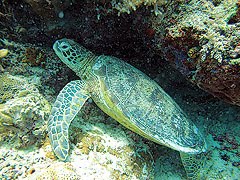
Paradise 2 is not far off. Dinner table-sized green turtles, cuttlefish and minute mandarin fish are all residents.


The resort, and the island, fully qualify for tropical-island-getaway bliss. Accompanying non-divers will be able to laze around the pool, acquire a hammock or chill out at the beach bar overlooking the wooden pier and jetty to watch their beloved backroll into an underwater haven.


But the bigger draw is — and has been for decades — Pulau Sipadan, another island about 40 minutes by speedboat.


Jacques Cousteau came to Sipadan, as it is more commonly referred to, and was left breathless. In his 1989 film Borneo: The Ghost of the Sea Turtle, Cousteau said: "I have seen other places such as Sipadan 45 years ago, but now no more. Now we have found an untouched piece of art."


As the dive boats approach the island, the sea turns lighter than the sky with a greenish-transparent hue, reassuring one and all that, yes, this is going to be amazing. On the white sandy beach, a young monitor lizard creeps towards the coconut palms and other vegetation swaying in the breeze for shade.


Haven of solitude


The island was declared a marine reserve in 1981 but it was not until 2004 that resorts on the island were asked to vacate in order to protect the water quality and environment further.


A permit system was introduced to limit the area to just 120 divers per day (40 ringgit or Dh50 per day for all visitors, diving or not, payable in the resort). There are no inhabitants and visiting the island is not allowed. A few military guards oversee security.


Since then, Sipadan has been referred to as a "sub-aqua Shangri-La" for serious divers in more than one travel guide. After seeing green turtles mating for the first time, schools of jackfish, barracuda and big-eye trevally and reef sharks fighting over a cave in just one dive, the statement rings true. It is also a stopover point for migratory birds and was originally declared a bird sanctuary in 1933.


One of a kind


Sipadan is the only oceanic island in Malaysia; it is not attached to the continental shelf and stands on a limestone and coral stalk, rising 600 metres from the bed of the Celebes Sea. The limestone pinnacle mushrooms out near the surface, but a few metres offshore it drops off in a sheer underwater cliff to the seabed.


At several sites, people drift-dive in the current along this coral wall which disappears into the deep. Black- and white-tip reef sharks are common, hawksbill and green turtles glide like jumbo aircraft coming in to land, troops of bumphead parrotfish nibble the shallow corals and each dive will leave you more mesmerised than the one before.


Continue reading (Incl. Pic) at: Speechless in Sipadan

.

.

Wednesday, July 20, 2011

Pulau Sipadan waters to be gazetted

SANDAKAN: There is a need to gazette the waters off Sipadan Island as a protection park to safeguard marine life there, said Sabah Parks director Paul Basintal.

At the moment only the island, stretching 13.5km, has been gazetted and the waters would be gazetted in the second phase.

He noted that 12 popular diving spots in the area did not come under the conservation zone.

Speaking to reporters after opening a Sabah Parks seminar here yesterday, Paul said the process to make it a gazetted area was in progress, with the cooperation of relevant authorities, like the Semporna District Office, which had put up a public notice pertaining to the proposed gazette.

“There have been no objections till date,” he added.

Paul said marine park Tun Mustapha Park in the north of Sabah, is also expected to be gazetted by 2015.

The park, which stretches to 1.1 million hectares, covers the waters off Kudat, Kota Marudu and Pitas, including 50 islands.

Continue reading at: Pulau Sipadan waters to be gazetted
.
.

Friday, July 1, 2011

Bajau Laut: Gypsies of the sea

I’m in the southeastern Borneo town of Semporna, the gateway to the paradise islands of Sipadan, Mabul and many others, all of which are great diving spots.

But I’m not here to swim in the crystal clear ocean.

I’m here to visit the Bajau Laut settlement built on stilts over the Celebes Sea.

Originally hailing from the southern Philippines, these seafaring gypsies have migrated south over the last few decades to the Malaysian state of Sabah and onto islands in Indonesia.

They make up around 13 percent of the total population in Sabah, and their numbers around the world are currently estimated at 400,000.

While their nomadic lifestyle has been curtailed, the Bajau Laut still choose to build homes over the water on stilts.

The stilt village I visit is a melting pot of migrants from other parts of Malaysia, Myanmar, Thailand, Indonesia and the Philippines. I even came across a little girl from North Korea, whose family had escaped via China and finally settled here.

On the shores off Semporna, the first stilt homes are well designed and have all the usual modern conveniences.

I strike up a conversation in broken English with a retired Malaysian army officer and he invites me into his home for a quick peek.

Aside from the beautiful ocean view on three sides, the home was decorated like any other Malaysian home.

Continue reading (Incl. Pics) at: Bajau Laut: Gypsies of the sea
.
.

Monday, June 27, 2011

Sabah in Malaysia Becoming Favourite Diving Destination for People

As per the reports of diving experts, Sabah in Malaysia is the territory which is best known in the world for the adventure sport of scuba diving.

Most of the people like to visit Sabah during their diving Malaysia tour; however facility of diving is available in Peninsular Malaysia and Sarawak also.

Palau Sipadan which is supposed to be number one diving site the world is also located in Sabah.

Perhaps Sipadan plays major role in attracting the divers towards Sabah. Sipadan is the island and its waters contain wonderful marine life.

Large number of green and hawksbill turtles are found underneath the water in Sipadan and “Turtle Tomb” is the unique thing available which is an underwater limestone cave.

This cave boasts of labyrinth of tunnels and chambers in which you find skeletal remains of turtles.

Another destination to dive in Sabah is Palau Mabul which has the distance of 20 minutes from Sipadan if you go through boat.

This is the small island which is surrounded by sandy beaches. It is an ideal destination for those divers who want to see exotic small marine life.

Mimic octopus, bobtail squids, Flamboyant cuttlefish and blue-ringed octopus are some perfect examples of marine life available here.

Moreover, some wonderful diving resorts are also available in Mabul.

Continue reading at: Sabah in Malaysia Becoming Favourite Diving Destination for People
.
.

Tuesday, June 7, 2011

Sipadan - Unique underwater gem

In the Celebes Sea off the coast of Malaysia's Sabah state, on the northern tip of Borneo, Sipadan remains a real gem of the underwater world.

A fisherman on the boat nearby swirls his index finger and my dive leader explained excitedly. "A barracuda vortex is beneath us."

With no time to waste, I don my diving gear and roll into the waves. Minutes later, I found myself swimming side by side with hundreds of barracuda in a tornado-like formation.

It is not a big surprise in Sipadan. Boasting an abundance of marine life, divers here have a greater chance of coming across huge shoals of large fish. Only an hour earlier, I'd been impressed by a gigantic shoal of jack fish.

Rising 600 metres from the seabed, Sipadan is the only oceanic island in Malaysia. Formed by corals growing on top of a volcanic cone, the island is ringed by turquoise water which is as shallow as a few metres. Steps away, however, is an underwater cliff that plunges 600 metres. If you drop anything in the dark blue water, you have a few seconds to grab it before it sinks to the darkness below.

Surrounded by deep water which remains the same temperature all-year long, Sipadan allows a variety of unusual species of marine life to flourish around it. What is quite rare elsewhere can be easily found here. Whitetip sharks and green turtles up to 2 metres long are quite common here, as are various colourful nudibranch in different shapes and sizes.

Sipadan's teeming marine life is due in large part to strict regulations that aim to preserve this precious natural resource.

Continue reading (Incl. Pics) at: Sipadan - Unique underwater gem
.
.

Wednesday, May 4, 2011

Scuba Diving Malaysia

Malaysia is rated for many years by both underwater cineastes as also underwater photographers as the number one diving top spot in the world.

Actually this is not true, it is not Malaysia which is rated so high, but one diving area called Pulau Sipadan, which offers some of the most amazing macro and micro fish life in the entire world.

Malaysia exists of 3 territories, Sabah, Sarawak and Peninsular Malaysia. All areas offer diving and some places are better then others.

Diving Sabah

Sabah is Malaysia's hotspot for diving, with islands Pulau Mabul , Pulau Kapalai, Pulau Sipadan, Pulau Labuan and many others, it brings the best diving in the world. Some islands stick from the seafloor like pinnacles, and bring large fish life from the deep. Currents can be strong and these areas are not really for the starting diver, however Open Water courses are offered.

Diving Sarawak

Sarawak has a plentiful rivers, which all run out into murky estuaries, and the diving industry has hardly been developed in Sarawak. Off shore there is some good diving to be done, but it often takes a long and costly boat ride. Miri and area offers a ore friendly underwater world. Pulau Satang close to Kuching is another hotspot in Sarawak.

Continue reading at: Scuba Diving Malaysia
.
.

Sunday, April 24, 2011

Sea of shrinking sharks in Sabah waters

The shark population in the waters off Sabah is getting smaller and this is mainly due to shark finning activities.

DIVERS' logs in Sabah are beginning to show fewer sharks. “In 1996/97 when I first came here, we did a lot of surveys to see what the issues and problems were and what we could do about them,” says marine biologist Steve Oakley.

“In December last year and January this year, a group did a lot of dives around Sabah. We have taken their information as well as information from dive resorts around the coasts and have come up with a picture of how many sharks have been lost.”

According to Oakley, who set up the Green Connection Aquarium in Kota Kinabalu, a staggering 98% of the sharks that had been recorded from 1996 have been lost.

A quick Google search revealed that Malaysia is ranked among the top 10 countries in the world that contribute to the depletion of sharks.

Both the International Union for Conservation of Nature (IUCN) and the Convention on International Trade in Endangered Species (Cites) have determined that sharks need protection. Many countries including the US (Hawaii) have imposed a ban on shark fishing.

Over the past few years, the campaign has picked up with “Say No to Shark's Fin Soup” groups from various countries supporting each other over the Internet. Their aim is to discourage people from consuming the soup, the biggest contributor to shark depletion. They also seek to remind people about the sharks' role in the ecosystem of the ocean.

Recently, this effort became more urgent as divers off Mabul Island, another popular dive site near Sipadan off the coast of Semporna in Sabah, witnessed the regular killing of sharks.

When he heard this, Kirk Keong Lee, founder of the Facebook group “Save the Shark from a Bowl of Soup”, went to Mabul to see it for himself.

“It was 6.45pm when someone told me there was shark finning in one of the villages. I rushed over with my camera and managed to see six or seven sharks, about two metres long, on land and another four or five in the water that had already been finned.

“I took a few pictures and when I turned off the camera, one of the persons there who spoke English well told me not to share the photos because some people had said it (sharks finning) was illegal,” he says.

“The fishermen cut off the fin, head and teeth (jaw) and dumped the body into the sea.”

Continue reading (Incl. Pic) at: Sea of shrinking sharks in Sabah waters
.
.

Saturday, February 26, 2011

Picture perfect day with Sea Gypsies in Semporna

Bajau children playing in a boat

Coral and sea creatures can be seen through the crystal clear waters

Tall coconut trees provide shade from the bright sunlight

Diving homestay where we stayed at Mabul Island

Bajau family relaxing during sunset on Maiga Island

Photos courtesy of and Copyright to Azrol Azmi and Brunei Press Sdn Bhd.


By Azrol Azmi

If you are planning an island resort getaway this coming school holidays in March, look no further than Semporna and its surrounding islands, which offer stunning white sandy beaches and picturesque views.

Imagine crystal clear waters, long stretches of white sandy beaches, cool breeze blowing from the sea and tall coconut trees providing shade from the bright tropical sun as you unwind on one of the islands.

Semporna, a town located in Tawau division on Sabah's east coast, is inhabited mainly by ethnic Bajau Laut, also known as Sea Gypsies, many of whom live in sprawling stilt villages above the water or in traditional Lepa boats.

Semporna is a gateway to the some of the best dive sites in the world which are situated about an hour's boat ride away.

Among the islands that can be visited are Mabul, Kapalai and of course, Sipadan surrounded by the Sulawesi Sea which needs no introduction to avid divers from around the world.

There are other islands with equally fascinating dive sites. Tourism Malaysia is working hard to promote the lesser-known but equally beautiful dive sites in Sabah such as Si Amil, Mantabuan, Sibuan and Bohey Dulang.

As many as 101 dive spots have been identified by a team of divers who hope to bring greater attention to Sabah's other dive site jewels. These sites are listed in the Sabah 101 Dive Treasures brochure.

I recently went on a photo expedition with a group of friends with the same interest to capture the beautiful scenery at some of these islands.

We started our journey driving from Brunei Darussalam to Kota Kinabalu before catching a flight from Kota Kinabalu International Airport to Tawau Airport, (which is the nearest airport to Semporna) before proceeding on an hour's drive to Semporna town in a tour bus. Enquiries at the airport revealed that public buses and taxis are available to transport people from Tawau to Semporna at a reasonable fee.

In Semporna, we made our way to the public jetty where our friend from Tawau, Muslianshah, who oversaw our stay during our photo expedition, awaited with a boat ready to take us to our first island, Maiga.

We made a quick stop at Bohey Dulang island to take a closer look at the Bajau or Sea Gypsies. We learnt that the Bajau community made their living from fishing and farming seaweed which they sell in Semporna.

Maiga is not well-equipped to receive tourists as the island does not have the basic amenities of running water and electricity. We were told that we would be "camping out" but we actually slept in a makeshift hall built by the Bajau.

We visited other islands before finally staying in Scubajeff-Sipadan diving homestay at Mabul Island, which is one of the more popular islands among diving tourists and beachcombers.

Mabul is well-equipped to receive tourists and even has a resort as well as several diving homestays to cater for "budget" divers.

Mabul is situated just 25 minutes from Sipadan. Running water and electricity are available on Mabul and a few shops selling everyday items can be seen in a small village populated by the Bajau.

More photos can be seen at www.flickr.com/photos/azrolazmi and look for Semporna set.

Courtesy of Borneo Bulletin Weekend
.
.

Thursday, December 30, 2010

Sipadan dive permit quota to stay

KOTA KINABALU: Sabah will not increase its daily permits for diving at Sipadan island.

State Tourism, Culture and Environment Minister Datuk Masidi Manjun said the move to maintain a 120 daily dive permit quota is to ensure preservation of Sipadan’s environment.

He said Sipadan, which is part of the Semporna marine area, was only recently endorsed as the richest marine bio-diversity spot on Earth by a team of top scientists, remained a favourite tourist spot with a waiting list that stretches up to seven months.

“If we do not protect and conserve our environment, the tourism industry will not be able to thrive because the environment is the asset for the tourism industry,” he said, in reiterating he state is taking the necessary steps to preserve its natural heritage.

He said similar measures to preserve the environment was also taken for Mount Kinabalu where the number of climbers are limited to 192 a day.

“No matter how many visitors we have, we have to do something to prevent these flora and fauna from being affected,” he added.

He said the Sabah government would not be implementing any physical development at internationally renowned rainforest research center in the Danum Valley and also the bio-diversity rich Maliau Basin which is also known as the ‘Lost World’.

Continue reading (Incl. Pic) at: Sipadan dive permit quota to stay
.
.

Tuesday, December 28, 2010

Long waiting list for Sipadan visit

Sipadan Island remains the favourite dive spot for tourists with a waiting list that stretches up to seven months, Minister of Tourism, Culture and Environment Datuk Masidi Manjun said.

Masidi said the government had taken steps towards protecting the environment, including limiting the number of tourists to Mount Kinabalu and Sipadan Island.

“No matter how many tourists we have, we have to do something to prevent these flora and fauna from being affected.”

He added that the preservation of wildlife at Danum Valley was also being taken seriously by the government.

“In order to ensure the animals do not become victims of illegal poaching, the government has stopped all road upgrading projects,” he said at the opening ceremony of Universiti Teknologi MARA (UiTM) dance festival here on Sunday.

The festival attracted more than 300 participants from higher learning institutions from Brunei, Sarawak and Kalimantan.

Continue reading at: Long waiting list for Sipadan visit
.
.

Sunday, December 12, 2010

A trip to explore new diving spots in Sabah

Sipadan Island in Sabah needs little introduction as a diving site of extraordinary appeal and is especially renowned for big fish encounters, wall diving and drift dives. However, the popularity of this "untouched piece of art" as Jacques Costeau once remarked, has overshadowed other equally fascinating dive sites in the area.

In a bid to introduce and promote other dive sites in Sabah, Tourism Malaysia and Sabah Tourism Board are organising a special familiarisation trip for 19 local and international media and tour agents from December 14 - 18. According to a press release, the participants are from Brunei, China, Hong Kong, Malaysia, the Philippines, Singapore and Thailand.

Through the trip, it is hoped that the media participants can highlight these dive destinations in their publications while tour agents can create new diving packages to these locations.

The trip aims to open the eyes of the participants to other lesser known, but equally beautiful dive sites in Sabah such as Si Amil, Denawan, Mantabuan, Sibuan and Bohey Dulang.

As many as 101 dive spots have been identified by a scout team of avid divers who hope to bring greater attention to Sabah's other dive site jewels.

These sites are listed in the Sabah 101 Dive Treasures brochure, which also promotes Sabah's many islands such as Mataking, Pom Pom, Sibuan, Siamil and Pulau Tiga.

The brochure also provides a directory of dive operators, resorts and a map of diving locations in Sabah. It can be obtained for free from Tourism Malaysia's Tourist Information Centre in Kuala Lumpur, Selangor and Sabah.

For more information contact Ms Trecey J Tojuka, Tourism Malaysia Sabah at +088 211 732/248 698 or email, tracey@tourism.gov.my or visit www.tourism.gov.my.

Courtesy of Borneo Bulletin Sunday
.
.

Wednesday, December 1, 2010

Sipadan Island - A diver’s paradise

Sipadan is the country’s only oceanic island and the Government has taken drastic steps to protect this national treasure.

THE water around Sipadan Island in Sabah is so clear you can see happy, healthy colonies of fish, turtles, corals and other marine life in it.

But less than 10m from the shore, the turquoise water turns completely dark. The sea suddenly plunges into the dark unknown — a scary prospect for snorkellers.

But all is good. This distinct change in colour marks one of the island’s famous dive sites: The Drop-Off. It’s 600m straight to the bottom and it’s what makes Sipadan unique.

You see, Sipadan is really an underwater mountain. It is an oceanic island, which means it is not connected to any continental shelf but rises straight from the deep ocean floor.

Most of the diving done in Sipadan is wall diving where the coral reefs are vertical, not below the diver as is the case in other places.

This is a great place for divers to hone their buoyancy skills — you do not want to go below the 30-35m safety limit of recreational diving — while enjoying the scenery at the same time.

But you can’t stay on the island as it has no resorts. This has been so since 2004. Many believe that this was done for security reasons. In 2000, 21 people were taken hostage by armed gunmen on the island (they were later released unharmed).

According to Clement Lee, managing director of Borneo Divers Resort, tourists are not allowed to stay on the island because of environmental reasons. The only evidence of civilisation there is an army camp.

Borneo Divers began operation on Sipadan Island in 1983. Recreational scuba diving was virtually unheard of in Malaysia then, especially in Sabah.

“We were the pioneers in diving tourism here. It started earlier in the peninsula, at least 30-35 years ahead of us although it was very sporadic,” says Lee, who comes from Kota Kinabalu.

In 1988, maritime legend Jacques Cousteau visited Sipadan to shoot a documentary, Ghost Of The Sea Turtle.

Over a period of 20 years, however, Lee witnessed the degradation of the marine life and the environment. There were too many divers and operators, he says.

The small island could not withstand the traffic it was getting.

In the past, the island was at the centre of a territorial dispute between Malaysia and Indonesia. The matter was brought for adjudication before the International Court Of Justice and, at the end of 2002, the Court awarded the island (along with the island of Ligitan) to Malaysia, on the basis of the “effective occupation” displayed by the latter’s predecessor (Malaysia’s former colonial power, the United Kingdom) and the absence of any other superior title.

Continue reading (Incl. Pics) at: Sipadan Island - A diver’s paradise
.
.

Monday, November 8, 2010

Mysteries of the deep: Turtle tomb of Sipadan island

Divers explore the turtle tomb, while warning signs
are posted at the entrance of the cave


Turtle bones litter the sandy bottom of the cave,
claiming at least one life a year


A turtle resting just outside the entrance of the tomb

The scattered turtle bones are an eerie and grim reminder of
what would happen if divers were to lose their way


Scattered turtle bones on the cavern floor.
Turtles that get lost here hardly return to the surface


Photos courtesy of and Copyright to
Mohammad Abdullah and
Brunei Press Sdn Bhd.


By Mohammad Abdullah

An unforgettable experience is a dive through the mysterious cave system of the turtle tomb, just off Sipadan island. A labyrinth of passageways runs through the reefs, 20m below the surface.

It's not for the faint of heart, as there are plenty of dead ends along the way to the tomb 200m from the entrance where turtle skulls and bones litter the bottom.

Warning signs indicate the dangers beyond the entrance and those going into the cave need to be fully equipped for cave exploration at the risk of getting lost in silts are real and imminent. The cavern, better known as the turtle tomb or graveyard, was just recently reopened after a recent fatality claiming the life of a diver.

The cave itself is one of the most beautiful coral caves that can be found anywhere in the world. Unlike the limestone caves, there are no stalagmite formations and the colours on the walls indicate the different water levels over time.

The white sandy bottom and bright colour ceiling enhanced the light of the flashlights used to navigate the caves. The shelves of the caves are homes to flashlight fishes, moray eels, spiny cave lobsters, shrimps and large snappers that often take advantage of a divers light to catch their prey.

A narrow passageway leads to the actual tomb itself where so many turtles have found their last resting place. Because the cave is particularly long, turtles and dolphins have ventured in and have lost their way. Without air, they eventually perish and add to the skeletal monuments in the cave.

The turtle tomb consists of several interconnected parts, with the cavern being the easily accessible part while the actual tomb is far inside and can only be attempted with an experience guide using full cave diving equipment.

The skeletons and the darkness give the cavern an eerie sight. On the entrance to the cavern, skull and cross bones signs warn divers of the dangers that loom in the cavern. Skeletons of dolphins and marlins can also be found in the caves.

The caverns can silt up very quickly reducing visibility and only those properly trained should consider entering. Taking pictures in the cavern is also a problem. One must move very slowly in order to not disturb the waters, or else the fine white sand would rise up and silt up the cavern, making it not only difficult to take pictures but also dangerous for divers because of the low visibility.

The mouth of the cavern is almost constantly 'guarded' by thousands of big-eye trevally, greeting divers as they enter the cavern. They also offer a beautiful end to the dive as divers exit the cave, swirling above in a kaleidoscope of colours.

Divers who want to explore the cavern must have at the very least two full air tanks and strong flash lights. They must also be highly trained and be accompanied by experienced cave divers or instructors who are familiar with the cave system.

Divers have a strong sense of curiosity where exploring and discovery is part of the attraction, though sometimes an overzealous curiosity can be fatal. One would have to remember their diving training, and should never dive without a dive buddy. The turtle tomb has claimed many lives, even divers that have panicked or lost their way in the catacombs of the cavern. Though the turtle tomb still remains a great fascination for divers and marine mammals alike, the alluring yet dangerous tomb will continue to attract visitors, as well as claim the lives of marine creatures.

Courtesy of Borneo Bulletin
.
.

Infolinks